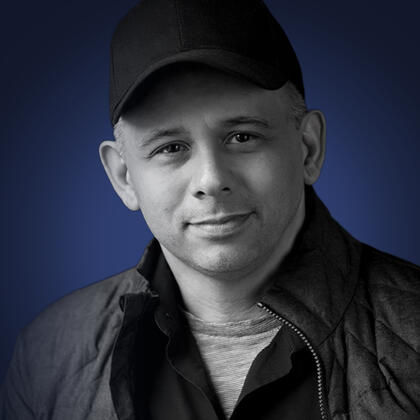
Thayne Wheeler
Independent director. Character-driven stories across genres.
Thayne Wheeler is a film director and production designer. He is the son of an Argentine mother and an American soldier, and he now calls Utah home.On a set, he works wherever the story needs him: designing sets, building props, making graphic art, and shooting photography. On Justin Time, one suggestion turned a script’s stone into an amulet. It grew into the film’s hero prop, its stand, and its wardrobe. For Angel Studios, he turned an illustration from The Wingfeather Saga into a miniature house with lit windows and a chimney that smokes.He is an ArtCenter alumnus in both film and entertainment illustration. He has taught at the college level since 2001, and he writes and directs his own work.His main project is the Canal Zone Documentary, a feature documentary and preservation effort about the Zonians of the former Panama Canal Zone. Learn more on the CZD page. To see how he works, start with Explore More.

Canal Zone Documentary
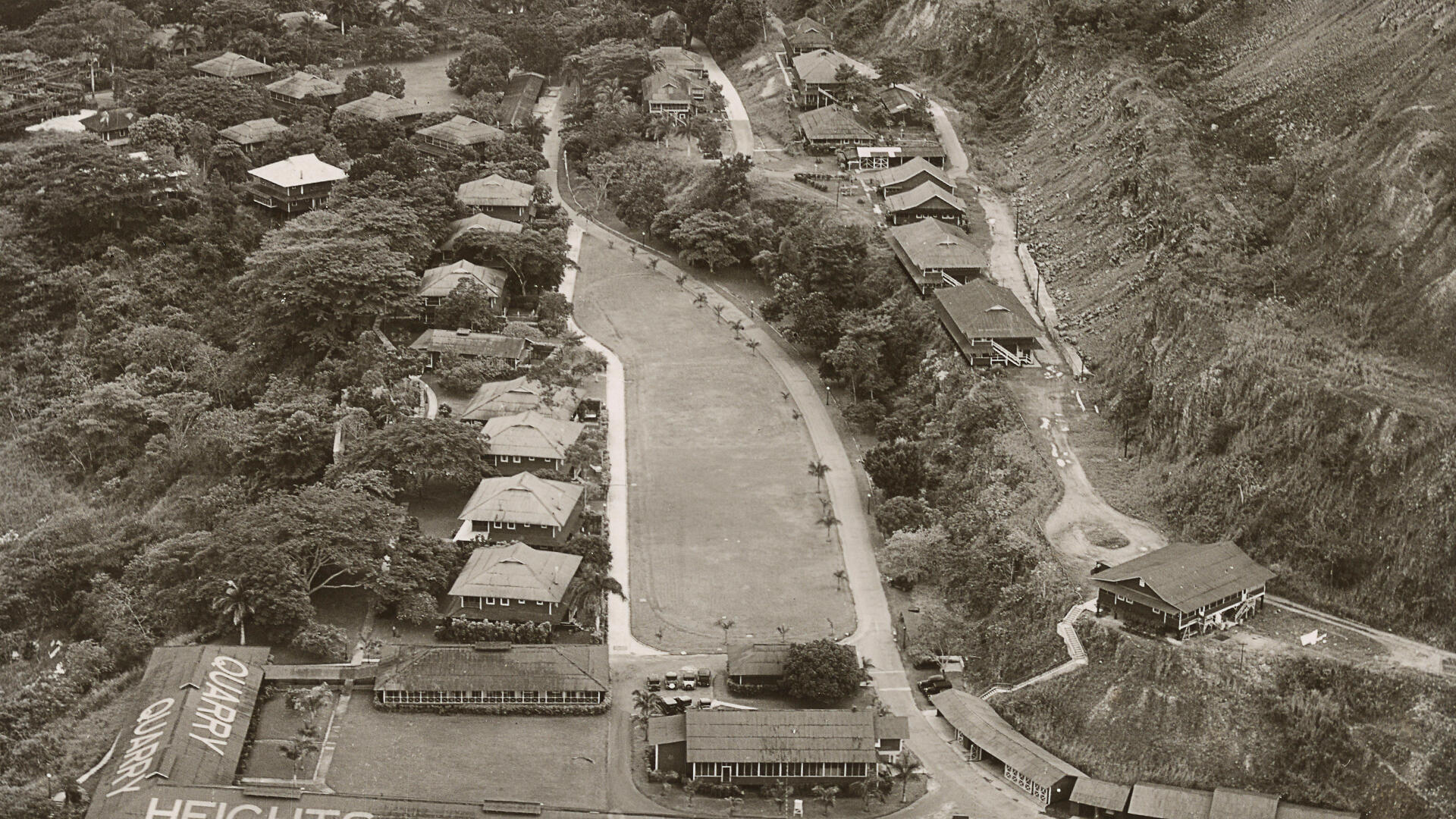
The photograph above is a cropped aerial view of Quarry Heights in 1932. I followed my father and the family to this U.S. Southern Command military base 49 years after it was taken. I was 11 when we arrived.The building at bottom center was the movie theater where I watched Raiders of the Lost Ark and other films, in that exact historic building. No AC and plenty of bats.I used to climb the stairs to its right to head home, though that upper level changed significantly before I lived there. You can still follow the road toward the top of the frame as it descends to a few homes, where a new housing unit would be built and where I lived. Continue down and it led to the front gate in the 1980s, where I exited to go to school.This is only one story and one perspective from a former resident of a community that no longer exists.No complete documentary of the Panama Canal Zone has been made by the people who lived there. This one will be.The Canal Zone Documentary is my effort to record the history, the culture, and the voices of the Zonians (residents of the former Panama Canal Zone) while those who remember it can still tell it themselves.The project builds toward a feature-length film. Along the way, it lives in the open. The CZD Review is a digital archival magazine, published as a PDF three times a year. Between issues, I share community stories, research, and behind-the-scenes work on the CZD Substack.Follow along: Facebook, Instagram, and YouTube: @canalzonedocumentaryGet involved
If you lived in the Canal Zone, or your family did, I want to hear from you. Share your story, your photographs, and the names of people who should be on camera. If you live in Utah, I am working with others to build a local group here. Message the CZD page on Facebook or write to me through the Contact page.Support the Canal Zone Documentary (CZD)
There are several ways to help this project move forward and some have no monetary costs. Please review the CZD Support page.

All Rights Reserved, © 2026, Thayne Wheeler & LionHart LLC.
Support Canal Zone Documentary
This film is made by one person and the community behind it. Every kind of support helps, and much of it costs nothing.Follow and share
Follow CZD on Facebook and Instagram. Like, comment, and share the posts that matter to you. Each share puts the project in front of another Zonian who may hold a story or a photograph.
CZD Facebook Page
CZD Facebook Group
CZD InstagramSubscribe on Substack
A free subscription keeps you connected to the CZD Review and the stories between issues. A paid subscription starts at $5 a month and does far more. It supports the research, the archive work, and the time each issue takes. It is the most helpful way to stand behind this project over time.
CZD on SubstackLeave a tip on Ko-fi
If a post or an article moved you, a Ko-fi tip is a simple way to say thanks. It is one time, with no commitment.
Tip on Ko-fiHelp the archive grow
I keep a list on Amazon of items this project needs: external hard drives, books on Canal Zone history, and archival storage to protect what Zonians send me. Each item covers a specific need.
CZD Amazon RegistryGive your photographs and papers a home
Several of you have asked what to do with family photographs, letters, and records when your descendants don’t want them. Institutions have strict criteria and timelines that often don’t fit a family’s situation. If this is you, contact me. We will work out what is best for your items. I will care for them, keep a record of where they came from, and credit you when they appear in the film or the CZD Review, if you wish. I cannot guarantee that any will show up in the film. Once the project is complete, I plan to offer them to an institution.Coming next: a crowdfunding campaign
When the film is ready for its next step, I plan to launch a campaign on Kickstarter or Seed&Spark. Subscribe on Substack to hear first.Support for CZD is not tax-deductible.

All Rights Reserved, © 2026, Thayne Wheeler & LionHart LLC.
About Thayne
Creative + Storyteller + Educator
Perspective Built Across Places, Disciplines, and People.
Military kids have to decide where they’re from. Some pick where their parents were born. Some pick the place that stuck. Mine is the Canal Zone. Like most military kids, I learned to adapt to new places, customs, cultures, and languages.My father grew up in Idaho Falls, Idaho and became a Green Beret and a Military Intelligence soldier. My mother was born and raised in Buenos Aires, Argentina and her father was an Italian painter from a small town north of Ferrera, who made walls look like marble. Army life moved us through Germany and then to the Panama Canal Zone, where I spent ages 11 to 18. I later lived and served in Mexico.I started drawing seriously in junior high. I invented faces and gave them props and wardrobe. I didn’t know it was concept art. A parrot painting I made there hung in Gorgas Hospital in the former Canal Zone.ArtCenter College of Design put me close to Hollywood. Working directors visited my classes and seminars, and many of my instructors worked in the industry. I studied illustration there, then returned for film directing. Dominick Domingo and Donovan Howard taught me to build characters and the worlds they live in. Brad Saunders and James Engelhardt taught screenwriting, because a director has to understand a script. Francine Parker taught me what a director does.
On a film, I work wherever the story needs me. I design sets, build props, make graphic art, and shoot photography. I’ve done graphic art on nearly every film I’ve worked on. On Love Everlasting, I built a fort and was the entire art department. On Justin Time, a stone in the script became an amulet I designed. For Sweet Pecan Summer, I made the hero pecan, and the crew thought it was real. I write my own scripts too.For Angel Studios, I turned an illustration of the house from The Wingfeather Saga into a physical miniature to help sell the show’s figurines. I built lights into the windows and a chimney that could release smoke, because I was thinking about how to film it before any commercial script was drafted.
That mix is why I’m directing my own work now, beginning with the Canal Zone Documentary. The longer path, with the teachers and the places, is on Explore More.

All Rights Reserved, © 2026, Thayne Wheeler & LionHart LLC.
Creative Fields
A film is made of many fields: drawing, design, photography, writing, and directing. I’ve worked in most of them, and each one taught me something the others use. The foundations of art and design help me construct the scene. Lighting a portrait helps me set a tone. Teaching helps me explain the shot. These disciplines are not an island.Art: Drawing, painting, and anatomy taught me to see the form beneath the skin. On a film, that tells me who a character is before they speak.Design: Branding, print, and web, and graphic art for film. A label, a newspaper, or a poster is a prop that a character would own.Photography: Light, lens, and where a person stands. Photography is film one frame at a time.Teaching: I explain every visual choice out loud, which is most of directing.Film: Directing and production design. See the Film page.
ART | DESIGN | PHOTO | TEACHING | SOCIAL MEDIA | EXPLORE MORE

All Rights Reserved, © 2026, Thayne Wheeler & LionHart LLC.
Art
The first thing I ever did, and the thing I’m finding my way back to.
Pencil portraits carried me through junior high and high school in the Canal Zone, and I studied art at BYU-Idaho, the Academy of Art College for a semester before then landing at Art Center College of Design. Art was my first passion, and it’s still the one that shaped everything else I make.Life sometimes pulls a person away from what they love. Mine did, for a long time.The foundation
At Ricks College, I took basic drawing, figure drawing, design and color, and oil painting. Leon Parson taught design and color and oil painting. I added ceramics, typography with Kelly Burgener, and design with Scott Franson. A semester at the Academy of Art College in San Francisco covered drawing, design, and color again.ArtCenter drilled the same skills harder. I took perspective, head drawing, the principles of drawing, and analytical figure drawing. Color theory, composition, and painting followed, with structure of painting, head painting, figure painting, and rendering. Gary Meyer taught perspective. Later classes moved into illustration, character development, and experimental and editorial illustration.I loved anatomy, and I loved drawing and painting people. I wanted to understand the form beneath the skin.The Sculpey test
In Rey Bustos’s Analysis of Form class in 1998, I brought Super Sculpey to class to test as a sculpting material. Rey took it and perfected it. Five years later, in Imaginatomy, it was his medium.
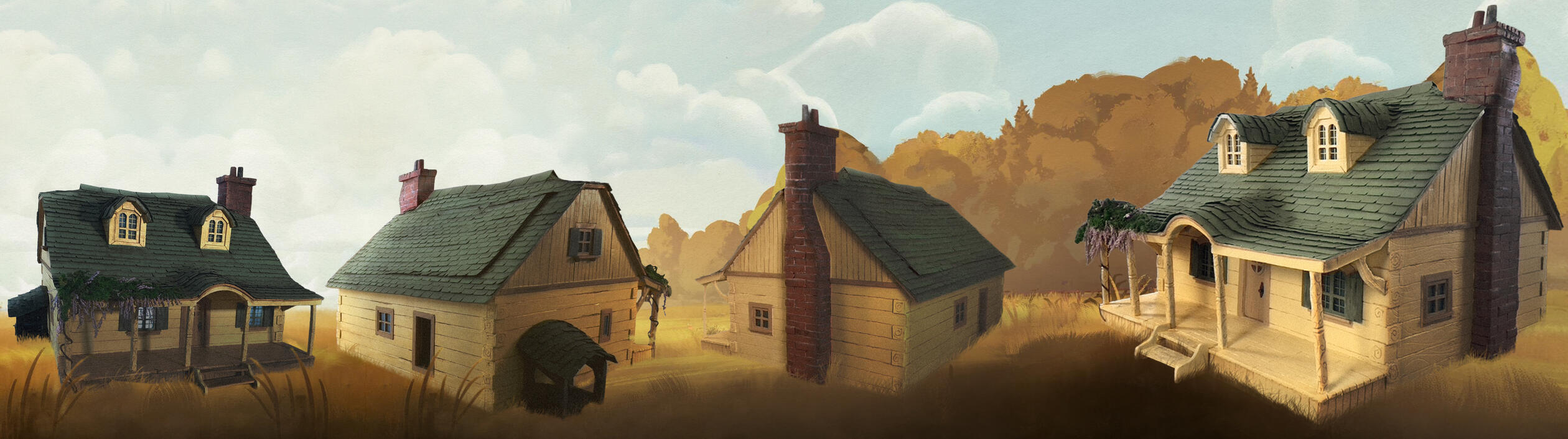
The miniature
For Angel Studios, I turned an illustration of the house from The Wingfeather Saga into a physical miniature to help sell the show’s figurines. I built lights into the windows and a chimney that could release smoke, because I was thinking about how to film it before any commercial script was drafted.
The Wingfeather SagaThe miniature resides at Angel Studios.
ART | DESIGN | PHOTO | TEACHING | SOCIAL MEDIA | EXPLORE MORE

All Rights Reserved, © 2026, Thayne Wheeler & LionHart LLC.
Design
Branding, print, and web, built with clear reason.
I was a graphic designer before I was a filmmaker. I built websites for other designers and created logos for businesses. When I co-owned a historic photography studio in Rexburg, I designed all of it: the branding, the folders, agreements, and brochures, the print ads, and the website. McBride Wheeler Studios looked the way it did because I made it look that way, and it grossed more than $350,000 in the years I ran it.My understanding of graphic design came from Kelly Burgener, Scott Franson, S. Valentine. Gregory Mann, Bruce Claypool and Shou Zhi Wang taught design and composition.The same skills work on a film. I’ve made graphic art on almost every film I’ve worked on, credited or not. A label, a newspaper, a grave marker, a brochure, or a poster is a prop, and a character would own it. Each one tells the audience something about the scene before a word is uttered.
ART | DESIGN | PHOTO | TEACHING | SOCIAL MEDIA | EXPLORE MORE

All Rights Reserved, © 2026, Thayne Wheeler & LionHart LLC.
Teaching the Arts
From college classrooms to convention halls.
I began teaching at the college level in 2001. Since then I’ve taught art, graphic design, film, and photography, along with Photoshop, Illustrator, InDesign, and Premiere, to beginners and working professionals.Glendale Community College, Cal State LA, ArtCenter Kids, the Art Institute of Salt Lake City, Bountiful Art Center, and Broadview Entertainment Arts University all had me in front of a class. I’ve taught independently, for the City of Rexburg, and at Professional Photographers of America events and photography conventions.I teach the way I was taught. My method came from my ArtCenter instructors, all of them, with no single teacher behind it. I focus on foundations and core structures, and on explaining why a choice works. Explaining each visual choice out loud is most of directing too.If you’d like to learn independent of a school, my Artforma channel on YouTube is the place to start. You can also contact me about instruction.My focus has always been the same: how to see clearly, and why a choice works. If you’d like to learn that way, independent of a school, my Artforma channel is the place to start. You can also contact me about instruction.
ART | DESIGN | PHOTO | TEACHING | SOCIAL MEDIA | EXPLORE MORE

All Rights Reserved, © 2026, Thayne Wheeler & LionHart LLC.
Photography
Editorial - Lifestyle - Beauty - Portrait
My photography began in Los Angeles in the early 2000s, on the sets of Jay P. Morgan, a commercial director and photographer. On a single project he worked as both. I learned on the job, setting up stands, lights, and power packs, dressing sets, scheduling, and running the crafty table. On Budweiser and Mitsubishi commercials, that was my work. For one Budweiser casting, Jay P. set the lights, tethered the camera to the computer, and told me how he wanted each person photographed. I shot about 100 models. From him I learned lighting, posing, and how a set runs.In Idaho, I became the last owner of McBride Wheeler Studios, a Rexburg portrait studio that had operated since about the 1890s. There I photographed everything: a mother with a newborn, seniors with their whole families, products, and portraits. I later moved to Utah and shifted toward lifestyle, fashion, and beauty work, some of it published in RAAMAT magazine.Photography also works for film. I photographed actors for the characters they played, so the props on set would feel real. For One Big Happy Family, I photographed Dante Basco and Lisa Brenner. For Sacred Vow, I photographed Shawn Stevens. I’ve also shot behind-the-scenes on productions.Photography is film one frame at a time: light, lens, and where a person stands.


ART | DESIGN | PHOTO | TEACHING | SOCIAL MEDIA | EXPLORE MORE

All Rights Reserved, © 2026, Thayne Wheeler & LionHart LLC.
Film
Where the fields meet.
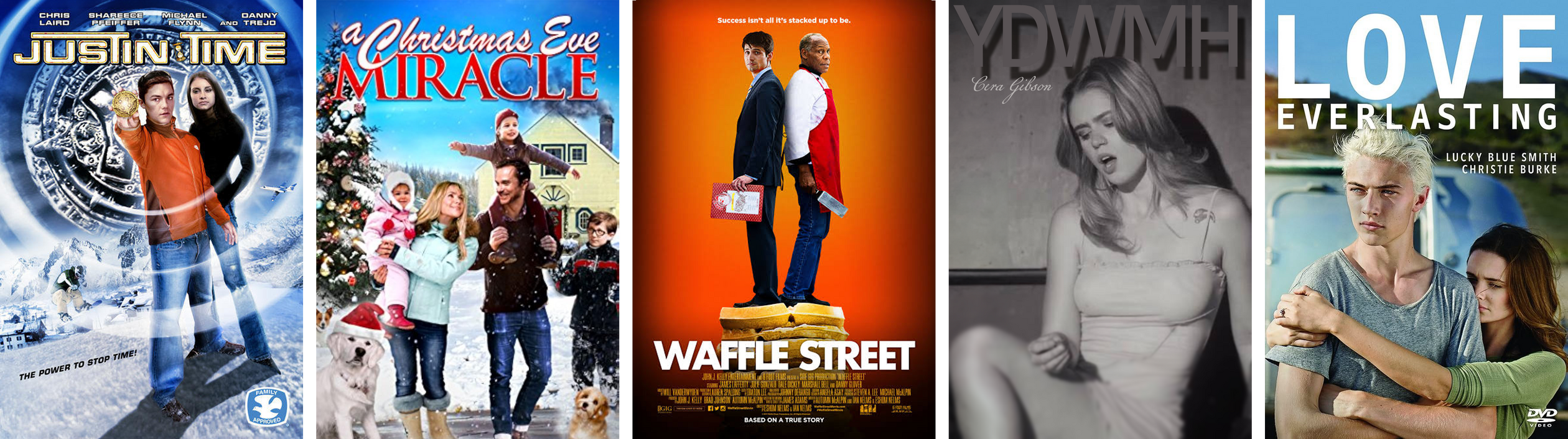
I started on Justin Time as the cinematographer, then moved to second camera. My credit is art director, and the work was a production designer’s: concept art, props, set dressing, and set decoration. The production was supposed to be an episodic series. When the studios dropped it at the last minute, it was salvaged as a feature.It began with one suggestion. The script had a fractured stone, and I proposed an amulet. That became a concept piece, and the producers liked it and asked what else. I built a dial that the amulet fit into, then a pyramid stand for the dial, and I designed the North American Indigenous wardrobe. I had the amulet made in metal, with plastic doubles. The metal ones were the hero on the film, and the plastic ones filled the distant shots. We gave metal ones to the studios as gifts, and I was told Hollywood loved the amulet. I was also the stunt double for the lead actress.That is how I usually work. On Love Everlasting, I built a fort and was the entire art department. For Waffle Street, I created all of the restaurant posters. I’ve made graphic art on almost every film I’ve worked on, credited or not. I’ve also directed short films, and I’m developing more of my own.Francine Parker taught me that the director owns everything, the failures and the glory. I carry that onto every set, whatever my title is that day.

All Rights Reserved, © 2026, Thayne Wheeler & LionHart LLC.
In Development
Working Title
Genre
One-liner
Canal Zone Documentary
Documentary
For nearly a century, an American community lived inside Panama, until 1999 forced its people out and scattered them into a diaspora.
Second Chance is the Charm
Coming of Age
A twenty-something who lives in comparison gets an unexpected second chance at high school, and discovers the life he wanted was never the one he missed.
Second Chances
Short Film
A girl shares her secret place of healing with her best friend, and he can’t stop joking long enough to see what she’s giving him.
Christian
Short Film
Born into a forgotten line of vampire hunters, a young man is turned into the very thing he was meant to destroy.
The Third
Thriller / Horror
Adrift in every way, a young man meets a new neighbor who seems to be everything he needs, and is the last thing he should ever let in.
Ignoble
Drama
A devout artist mistakes endurance for mercy as the one closest to him slowly dismantles his life, while those around him each see a piece of it and none step in.

All Rights Reserved, © 2026, Thayne Wheeler & LionHart LLC.
Media Kit
A quick overview for brands, agencies and collaborators. Download or view my media kit below for UGC, content creation and creative brand partnerships.My Focus: art, film photo, design, storytelling, tool, etc.
UGC (tools, art supplies, creative gear)
Product photography & editorial visuals
Voiceovers, storytelling & cinematic short form
TikTok Shop & Affiliate integrations
For a quick overview of deliverables, usage, and availability, view the media kit.
ART | DESIGN | PHOTO | TEACHING | SOCIAL MEDIA | EXPLORE MORE

All Rights Reserved, © 2026, Thayne Wheeler & LionHart LLC.
Where to Find Thayne
I create content across platforms. Here's where to connect, follow or view my work:
ArtGearGuru is on TikTok and focused on tools, materials, and practical decisions in the visual arts. The content centers on how and why tools are used—drawing from real-world experience across art, design, photography, and film—rather than trends or hype. It’s a space for thoughtful evaluation, clarity, and long-term usefulness, aimed at serious learners and working creatives. ArtGearGuru on TikTok
Artforma™ is an educational outlet focused on foundational visual principles—how artists see, think, and make decisions across mediums. Drawing from decades of professional practice and teaching, the content emphasizes clarity over trends, process over shortcuts, and transferable understanding rather than style imitation. It reflects the same underlying approach that informs my creative work: slow thinking, sound judgment, and respect for craft. Artforma™ on YouTube
The Panama Canal Zone community is made up of former residents and families connected to a place that no longer exists; a place that existed for almost a century. What remains is a shared cultural memory—stories, photographs, language, traditions, and a strong sense of identity shaped by life between worlds. Over time, that nostalgia has grown into active community spaces where history is preserved, discussed, and reinterpreted by thousands of people across generations. Maintaining these communities requires consistency, sensitivity, historical awareness, and an understanding of how content resonates emotionally over long periods—not just momentary attention.Panama Canal Zonian* | Canal Zone Documentary**Found on both Facebook and Instagram
I’ve used Pinterest for close to a decade as a visual archive and working reference—long before short-form content became dominant. It holds a broad range of material: my own photography, shared video, visual studies, and curated boards spanning art, design, film, and tools. More than a social platform, it functions as a long-term thinking space—one that reflects how ideas are gathered, organized, revisited, and refined over time.
Thayne Wheeler on Pinterest
ART | DESIGN | PHOTO | TEACHING | SOCIAL MEDIA | EXPLORE MORE

All Rights Reserved, © 2026, Thayne Wheeler & LionHart LLC.
Explore More
Projects, stories, and paths beyond the portfolio.
I didn’t set out to make films. I set out to draw and paint. As a kid I invented faces and the stories behind them, long before I knew that was character development. Every school after that added a piece: painting and color at Ricks, drawing and anatomy at ArtCenter, then directing, writing, and the business of making a living at it.This isn’t a list of schools. It’s what each teacher gave me and where I use it now, grouped by what I do on a set. Some taught me a skill. Some were hard on me, and I’m better for it. I still think of myself as a student.Where I come from
I come from several worlds.My father’s side is American. His father is where I get my name. He farmed, worked in security, and served in the Navy in World War II. He won awards for his shooting skills. He said he got that from his own father, who was supposedly better. My father grew up in Idaho Falls and became a Green Beret and a Military Intelligence soldier. He spoke Spanish and Army life moved us from place to place.My mother’s side is Argentine and Italian. She was born and raised in Buenos Aires. Her father, Domenico Periotto, came from Guarda Veneta, a small town in the Rovigo province, north of Ferrara and south of Venice. He fought in World War I and later painted walls to look like marble for businesses and wealthy clients. My mother painted small birds on beef bones. My aunt Delia and uncle Rogelio are both artists and professors in Buenos Aires, now retired. Art was the family trade long before it was mine.I lived in Germany, Mexico, and across the United States, from California to New York. I’ve traveled to Costa Rica. I spent ages 11 to 18 in the Panama Canal Zone, and that’s the place I call home.Foundation
Many art schools lean on theory. The training that shaped me did the work first and left theory for later.At Ricks College, Leon Parson, renowned wildlife painter, taught design, color, and oil painting. Kelly Burgener and Scott Franson taught graphic design in all of its forms.At ArtCenter, the drilling went deeper. Gary Meyer taught the foundations of art with perspective drawing. Gayle Donahue taught figure drawing and human anatomy, and I kept studying with her through my MFA. Richard Keyes taught color. Bruce Claypool taught structure and color in design. David Limrite and Bob Kato continued with learning to draw the human form and then into painting. Dallas Good and Rey Bustos reinforced the human form, with analysis in both drawing and in clay.Painters took it further: Peter Liashkov, Scott Hess, Aaron Smith, Daniel McCleary, and Laura Lasworth. I took composition, figure painting, contemporary figurative painting, structure of oil painting, and rendering with them.This is the base for every frame I build. Perspective decides where the eye goes. Color sets the mood. Form decides how a character may appear. And composition lays it out.The Character
In a master drawing class with Glenn Vilppu and Steve Huston, I took the foundation of drawing and anatomy into the figure in motion. Rey’s Imaginatomy class carried that anatomy and movement into imagined figures. Terryl Whitlatch, the creature designer on Star Wars: Episode I, visited our class and admired my fantasy sculpture.Tom Thordarson and Donovan Howard took those human and imagined figures into character development and visual development. Each of them asked: who is this character, and what do their form and wardrobe tell us?A director asks a similar question when casting. A casting director shows the options, and I choose from what I know about the character.
The world
A character needs somewhere to stand. Dominick Domingo taught background painting for animation. He taught the framing that lets a character stand, enter, or exit. Donovan Howard’s visual development class brought the character and its environment into one space, one world.Linda Shepard taught Photoshop for building 3D worlds, and I’ve used it in many other ways since.Norm Schureman taught visual communication, which meant speaking in images with a pen and paper. A prop, a vehicle, a character, or an environment came down to line, shape, and texture, drawn in minutes. The drawing wasn’t a finished piece for a meeting. It was made while sitting beside the person I was talking to, so we could see the idea together.On a set, those lessons are the job. Every wall, prop, and sign belongs to the character who lives there.Directing and writing
Francine Parker taught directing, and I took all three of her courses, each one built on the last. They were the hardest classes I took, in every way. You were exhausted before the semester ended. You went above and beyond, or you weren’t fit for her class.She taught everything: breaking down a script, researching every part of it, budgeting, building characters. Her main lesson was that the director is responsible for all of it. If the film fails, it’s your fault. If the actress does poorly, you hired her. The director takes the blame and the glory.She ran the class the way she ran a set, and she dominated it. Her corrections were blunt, and she took no excuses. She never told us to grow a thick skin. We grew one.She didn’t give compliments. Once, privately, in the teachers’ lunch room, she told me I was a good director. She never said it again.Judy Doty-Morse taught acting for directors, so I could see a scene from the actor’s side. Brad Saunders and James Engelhardt taught screenwriting, because a director has to understand a script. Jean-Pierre Geuens and John Hartzog taught theory, thesis work, and the study of films.Two lessons that apply to every field
Roland Young taught me to find what a piece is really saying. He hated fluff and opinions. He asked for the heart of the message, as it truly is and not as you wish it were, and he hit the bullseye every time. I took his Advertising 1 class as an undergraduate, then his film course, where we reviewed films and talked them through.Errol Gerson taught how a creative makes it in the business world. I took his class twice. His lessons were practical and mind-blowing, like instructions for building a dog house, with no fluff. His best example was his own resume. He had the paper cut to the size he wanted, then made it an eighth of an inch taller than standard. When someone gathered a stack of resumes and tapped them on the desk to even them out, his stuck up above the rest. That person would grab that little bit of paper and pull his out, and his was seen first. Good ideas weren’t enough for Errol. You had to stand out an eighth of an inch.Visiting artists
ArtCenter brought working artists and filmmakers to us all the time. Mark Ryden, Shepard Fairey and Tarsem Singh spoke to the students. Drew Struzan, the artist behind the Indiana Jones and Back to the Future posters, visited one of my classes. Years later, a friend took me to his house, and I saw how he worked. So many others came through that I can’t list them all.
ART | DESIGN | PHOTO | TEACHING | SOCIAL MEDIA | EXPLORE MORE

All Rights Reserved, © 2026, Thayne Wheeler & LionHart LLC.
Contact Thayne
Let's connect.
No automated replies. Messages are read and answered directly. I typically respond within 24–48 hours.

All Rights Reserved, © 2026, Thayne Wheeler & LionHart LLC.
As an Amazon Associate I earn from qualifying purchases.
This means I may earn a small commission if you purchase through my links, at no additional cost to you. I only recommend tools I use or trust.
Art Tools (Traditional)
Canon Mirrorless

All Rights Reserved, © 2026, Thayne Wheeler & LionHart LLC.